
The Enforcement Directorate has summoned Reliance Group Chairman Anil Ambani for questioning in a money laundering case linked to alleged bank loan fraud.

"There has been one meeting (on this). It is a matter of setting up the governance structures. Now ball is in the court of the Indian side to finalise the governance of the setting up of the fund. We are ready for it," the UAE ambassador Dr Ahmed Al Banna said.

The peace plan included that Gaza will be a deradicalised, terror-free zone that does not pose a threat to its neighbours and will be redeveloped for the benefit of the people of Gaza. The peace plan stated that if both sides agree to this proposal, the war will immediately end. Israeli forces will withdraw to the agreed upon line to prepare for hostage release.

The IPO wave of 2025 is here, and it's bigger than ever. From fintech unicorns to financial powerhouses and infrastructure giants, some of India's biggest names are all set to make their stock market debut. PhonePe, Zepto, Tata Capital, NSE, NSDL, and JSW Cement are just a few of the highly awaited listings that have investors and analysts buzzing with excitement.

The raids were linked to a sophisticated organised investment fraud scheme targeting unsuspecting individuals through fake mobile apps and WhatsApp groups.

If he cannot do it this term by using his bureaucracy and experts from different fields, it will be a tragedy, asserts Ramesh Menon.

''Now the roads in Bihar are as good as any other Indian state. The power sector has improved.' 'Connectivity, law and order, gender justice...' 'Bihar now stands for all these things that were totally absent when it was under jungle raj.'

Stocks to watch: ACC, Ambuja Cements, India Cements, Shree Cement, Ultra Tech Cement.

'...they always address problems superficially, never tackling root causes.' 'Currently, the policy response will focus on immediate relief -- getting people to safety, providing facilities, clearing debris.' 'This is necessary, but once immediate relief operations end, everything returns to 'normal' without addressing underlying vulnerabilities.'

'Despite being a software powerhouse, we're not producing proportionate original IP, frameworks, or global tech products originating in India.'

Long-term funding was a requirement for infrastructure projects, and asset-liability mismatch in the banking system, impacts the access to finance for infrastructure projects. One of the key challenges would, however, be to get private sector back into investing.

'Pakistan has found itself in a favourable position after Operation Sindoor by appreciating the mediation as claimed by Trump and recommending him for the Nobel Peace Prize.'

US hedge fund Tiger Global and Japanese investment giant SoftBank have trimmed their investments in Indian start-ups by over a third - from $3.8 billion in the second half of 2021 to a mere $1.08 billion in H1 2022, according to data from Venture Intelligence. While SoftBank's investments in India dropped from $1.9 billion in H2 2021 by more than a fifth to only $0.33 billion in H1 2022, that of Tiger Global fell from $1.92 to $0.74 billion in the same period. Private equity (PE) fund trackers point out that this year most of the deals that Tiger Global has invested in are in the early stage (up to series D), and only a few are in the series E and above.
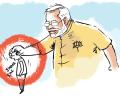
Prime Minister Narendra Modi on Wednesday urged all stakeholders to come together and invest in people for skill development, nurturing talent and promoting innovation which are essential for job creation and boosting the economy. Participating in post-Budget webinar on employment, Modi said the government has provided skill training to 3 crore youth since 2014 and decided to upgrade 1,000 ITIs and set up five centres of excellence.
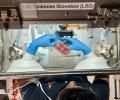
The $1.2 billion in-space manufacturing market is expected to grow and be worth more than $20 billion by 2033.

'Although we are facing constraints related to lending and resource mobilisation, the government is aware of these.'

A United Nations' body has called for greater public and private spending for upgrading critical areas of India's infrastructure, a key driver of the economy, and said a bulk of these investment need to be generated internally.

Bengaluru-headquartered electric two-wheeler manufacturer Ather Energy is all set to file its draft red herring prospectus within the second week of September to the Securities Exchange Board of India (Sebi) for its maiden initial public offering (IPO), in which it is expected to raise over $450 million. On Tuesday, the fourth-largest electric two-wheeler maker in the country by volume raised Rs 600 crore from its existing investor, the National Investment and Infrastructure Fund (NIIF), catapulting itself into a unicorn with a valuation of $1.3 billion.

Finance Minister Nirmala Sitharaman on Tuesday asked fintech firms to focus on risk management at a time when criminals are using AI to mimic voices, clone identities and create lifelike videos to manipulate people.

rediffGURU Nayagam PP, career counsellor and the founder of EduJob360, counsels students and aspiring professionals about how they can make the right career decision.

'India is a big market for StanC, and it is also fastest growing economy in the world.'

With Indian infrastructure companies burdened with debt, global PE funds and developers sense an opportunity to buy the airports cheap

About 57 per cent of Indian districts, home to 76 per cent of the country's population, are currently at high to very high risk from extreme heat.
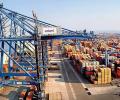
State-owned Life Insurance Corporation (LIC) on Thursday entirely subscribed to the Rs 5,000 crore bond issue of Adani Ports and Special Economic Zone (APSEZ) at a coupon rate of 7.75 per cent, said sources privy to the development.

Budget 2025 lays down a transformational roadmap for India's digital and economic future, focusing on AI-driven enterprise modernisation, workforce skilling, and sustainable innovation. With bold investments in AI, digital infrastructure, and ease of doing business, the government has set the stage for businesses to scale, innovate and compete on a global level.

These are the highlights of the Union Budget 2025-26 presented by Finance Minister Nirmala Sitharaman in Parliament on Saturday.

Union Road Transport and Highways Minister Nitin Gadkari on Wednesday pitched for formulating a policy for using the Reserve Bank of India's rising foreign exchange reserves for funding road projects, saying the country needs low cost finance for such infrastructure projects. Addressing a virtual event organised by industry body CII, Gadkari further said that the National Highways Authority of India (NHAI) should also have a financial arm like the power ministry's Power Finance Corporation (PFC). "We have a surplus of dollar reserves in the country. I have decided to talk with the RBI Governor, about how we can formulate a policy by which we can use this foreign exchange reserves for development of infrastructure in the country," he said.
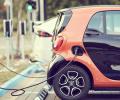
Despite the benefits of hybrid technology, a lack of government backing and few launches have kept the segment from gaining ground.

It is time for India to raise its voice not just through military prowess, but through professionalism, principled voting and partnerships, asserts Deepak Mishra.

'The scrapping of import duty would help Indian companies compete in international markets, thus paving the way for India becoming a space manufacturing hub for the world.'

Railways, rural infrastructure, urban rejuvenation, solar and transmission and distribution of electricity are the new priorities, says Vinayak Chatterjee.

Any additional effort to assuage the growing worldwide hunger for infrastructure funding is more than welcome, says Barun Roy.

Finance Minister Nirmala Sitharaman on Tuesday said monetisation of Central Public Sector Enterprises (CPSE) assets is based on the principle of value creation for the government and investors and would bring about a paradigm shift in infrastructure augmentation and maintenance. Chairing the National Workshop with the states/UTs on Asset Monetisation organised by Niti Aayog, the minister sought the collaboration of states for the holistic development of infrastructure. She said India can become a $5 trillion economy, while striking the right balance between fiscal imperatives and socio-economic welfare, through active collaboration between the public and private sector.
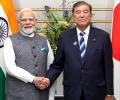
Prime Minister Shigeru Ishiba's sudden resignation after only a year in office has thrown Japan into political turmoil, raising doubts about how the country will handle economic and regional challenges, observes Dr Rajaram Panda.

Shifting to a PPP model could repeat the errors of the past

Only NIIF has stayed the course as a viable infrastructure financing institution.

The Cabinet meeting and the holy dip comes on a day that marks the first anniversary of the consecration ceremony of the Ram temple in Ayodhya.
Now that almost 10 infrastructure ministries have submitted a fresh list of their core infrastructure assets, the government has realised it stands to make much more money from asset monetisation than previously thought. Two persons in the government said it stood to garner over 30 per cent more than the earlier estimates of Rs 2.5 trillion over the next four years under the National Monetisation Pipeline (NMP). The NMP, which is being prepared by Niti Aayog, is in the advanced stages of finalisation and is expected to be unveiled in August.

India will place restrictions on foreign direct investment (FDI) in the national interest to ensure safeguards because of its location in a highly sensitive neighbourhood, Finance Minister Nirmala Sitharaman said during an interactive session at the Wharton Business School in the US on Tuesday. "I cannot blindly accept FDI simply because we need investment, unmindful of where it is coming from. "We want business, we want investment, but we also need some safeguards, because India is located in a neighbourhood that is very, very sensitive," Sitharaman said.

Tata Motors (TaMo) is aiming to gain market share across its passenger vehicle (PV) and commercial vehicle (CV) businesses - targeting a 40 per cent share in CVs and a 16 per cent share in PVs by 2027. Meanwhile, it has already achieved earnings before interest, tax, depreciation, and amortisation (Ebitda) breakeven in its electric vehicle (EV) business at 1.2 per cent (up 830 basis points), ahead of its target of 2025-26 (FY26).
